
Remain positive on the sector, see a strong corporate credit cycle
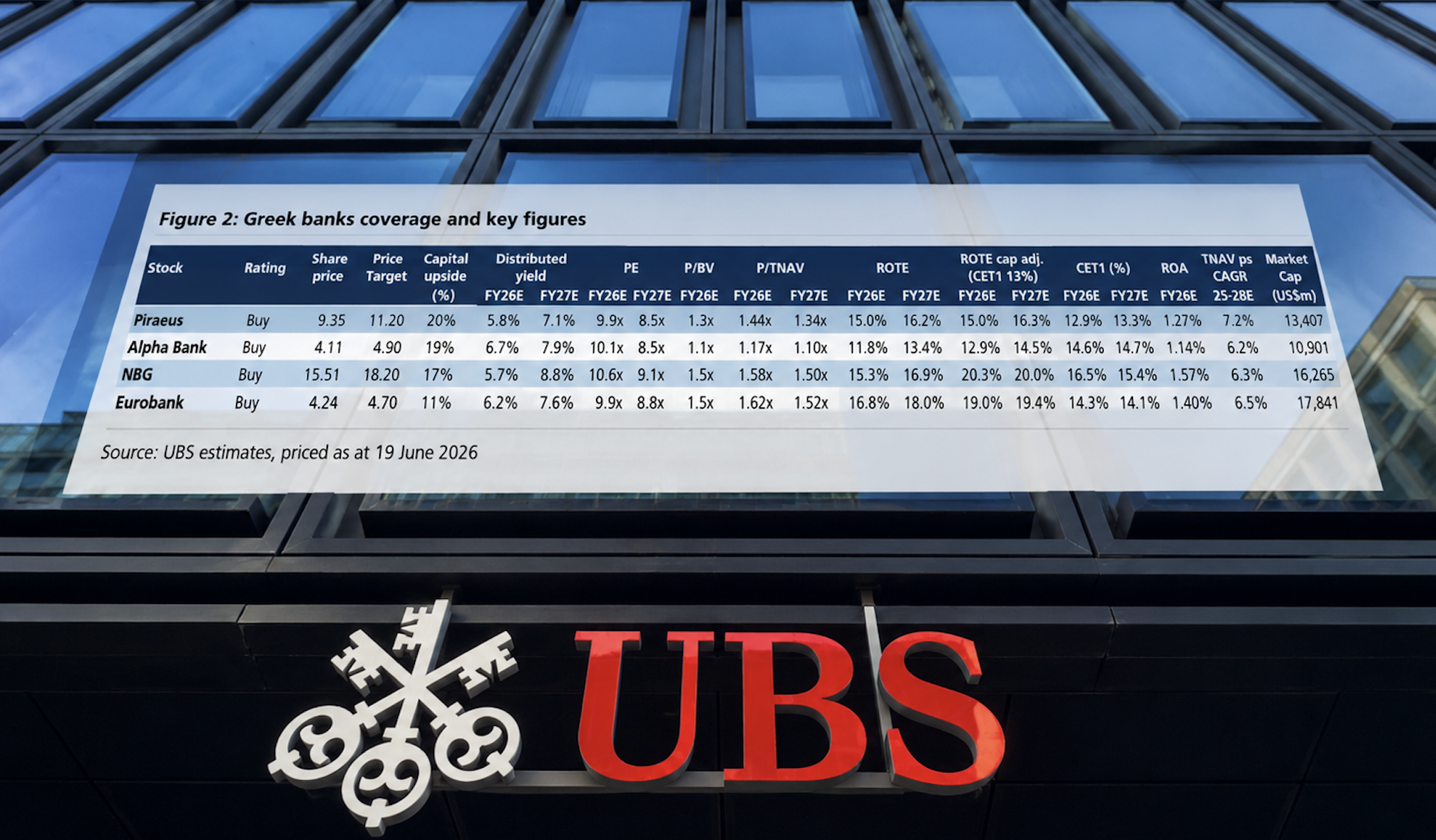
We see continued strong corporate credit growth underpinning earnings in the medium-term, with several acquisitions also an important driver of EPS growth and rising ROTEs. We have Buy ratings on all four Greek systemic banks, although we currently see a bit more upside to our price targets for Piraeus and Alpha Bank (see Figure 2 overleaf).
Tourism remains resilient despite the Middle East conflict
We track the number of international passenger arrivals in Athens as a key indicator of the tourism industry (weekly data with the latest as at 8 June). As shown in Figure 1 below, the usual pattern of a seasonal increase in international arrivals remained in place despite the uncertainty of the Middle East conflict, although growth has slowed to only 1.1% yoy compared to stronger growth in previous years (Figure 3 inside), ~12% yoy in the 2025 season, ~19% yoy in 2024 and ~23% yoy in 2023. However, growth has bounced back ~1% yoy from a decline of ~8% yoy in April. The banks indicated in their Q2 calls that tourism trends remained robust and that they have not yet seen an impact on corporate credit growth from the conflict.
Corporate credit books diverse, tourism only ~6% of big four total credit
Although tourism is an important industry for Greece, the corporate credit books of the banks are diverse with tourism contributing only ~6% of group credit and ~8%of corporate credit for the big for banks (Figure 5 showing total loan breakdown including operations outside of Greece). The contribution of tourism to the loan books of the big four is ~4.5% for Eurobank, ~4.7% for NBG, ~6.7% for Alpha and ~7.7% for Piraeus (gross loans as reported). We notice the higher contribution of retail credit of Eurobank at 38% vs. the average of the big four banks of 28% providing further diversification given Euro’s regional operations. Another key industry is shipping, but again the overall loan exposure is relatively modest at ~8% for the big four or ~11% of corporate loans. The banks also report continued robust performance of their shipping portfolios with ships exposed to the Middle East a relatively small proportion of the overall portfolio.

 Προσθήκη του MarketsReport.gr στην Google